Frequently Asked Questions About Muddy Boots Escapes & Kirkby Stephen
Practical answers for planning a stay in Kirkby Stephen, Cumbria — from parking, food and transport to walking, dog-friendly stays, local attractions, wedding venues and guest services.
Plan Your Stay with Confidence
Search the questions below or open any section for detailed local information. These FAQs cover Muddy Boots Escapes accommodation as well as useful information about Kirkby Stephen, the Upper Eden Valley, the Yorkshire Dales and nearby Cumbria.
Kirkby Stephen is a historic market town in Eden Valley, Cumbria, ideally located centrally in The North of England between the Yorkshire Dales National Park, the Lake District National Park, the North York Moors National Park and the Scottish Borders.
It’s a popular base for guests who want peaceful countryside, scenic walking routes, and easy access to Cumbria’s top outdoor attractions without the crowds found in larger tourist towns.
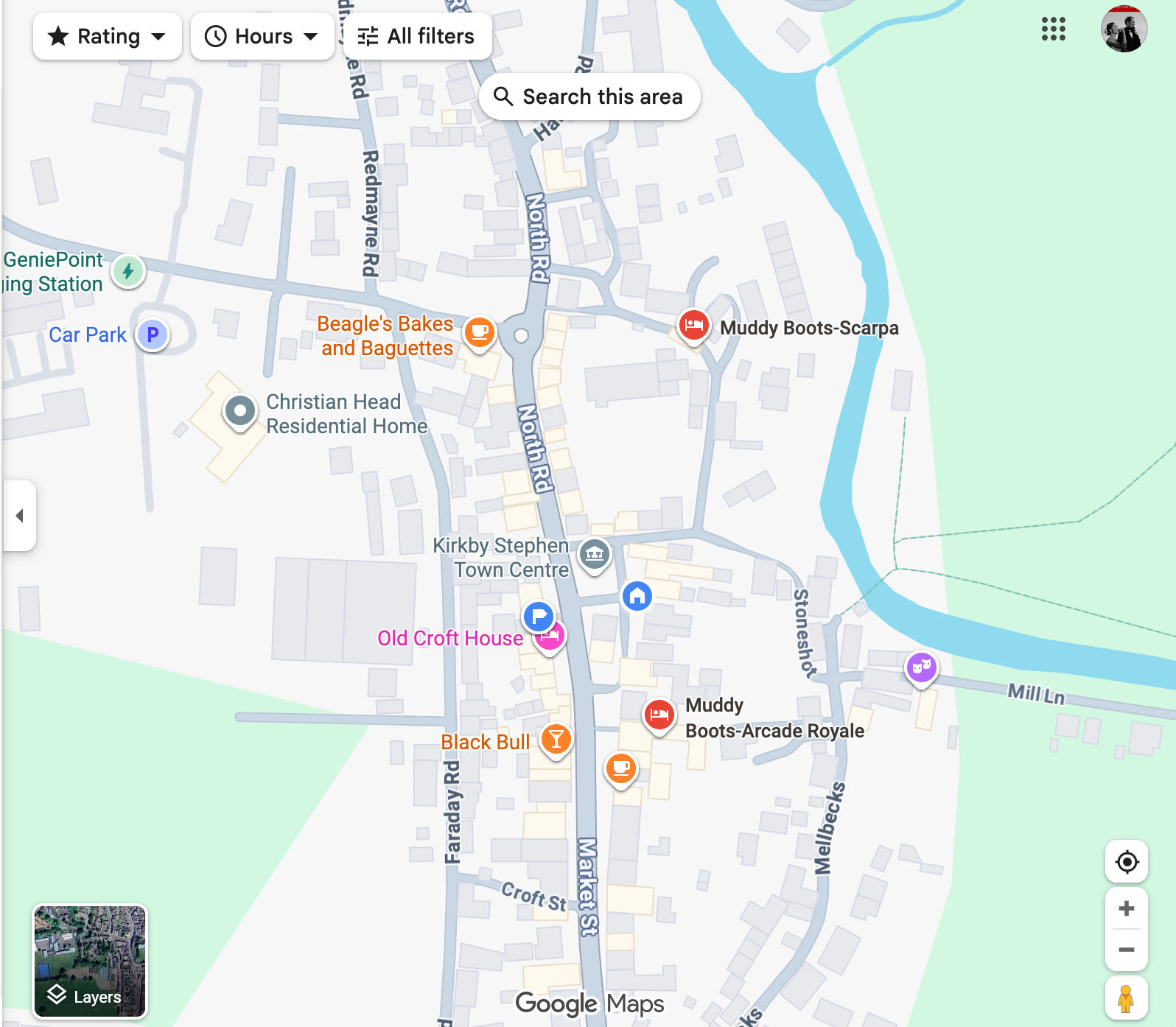
Google Maps — Kirkby Stephen
Muddy Boots Escapes highly rated 5-Star properties are the perfect choice for a stay in the town.
Muddy Boots Escapes-Properties
Please check out the following sites for more information:
- Visit Eden - Kirkby Stephen Upper Eden Visitor Centre
- Kirkby Stephen Official Page
Muddy Boots Escapes properties are tucked away but all conveniently located with short walking distance of the main street and shopping area of Kirkby Stephen.
- Muddy Boots – Scarpa
- Muddy Boots – Arcade Royal
- Muddy Boots – La Petite Mews
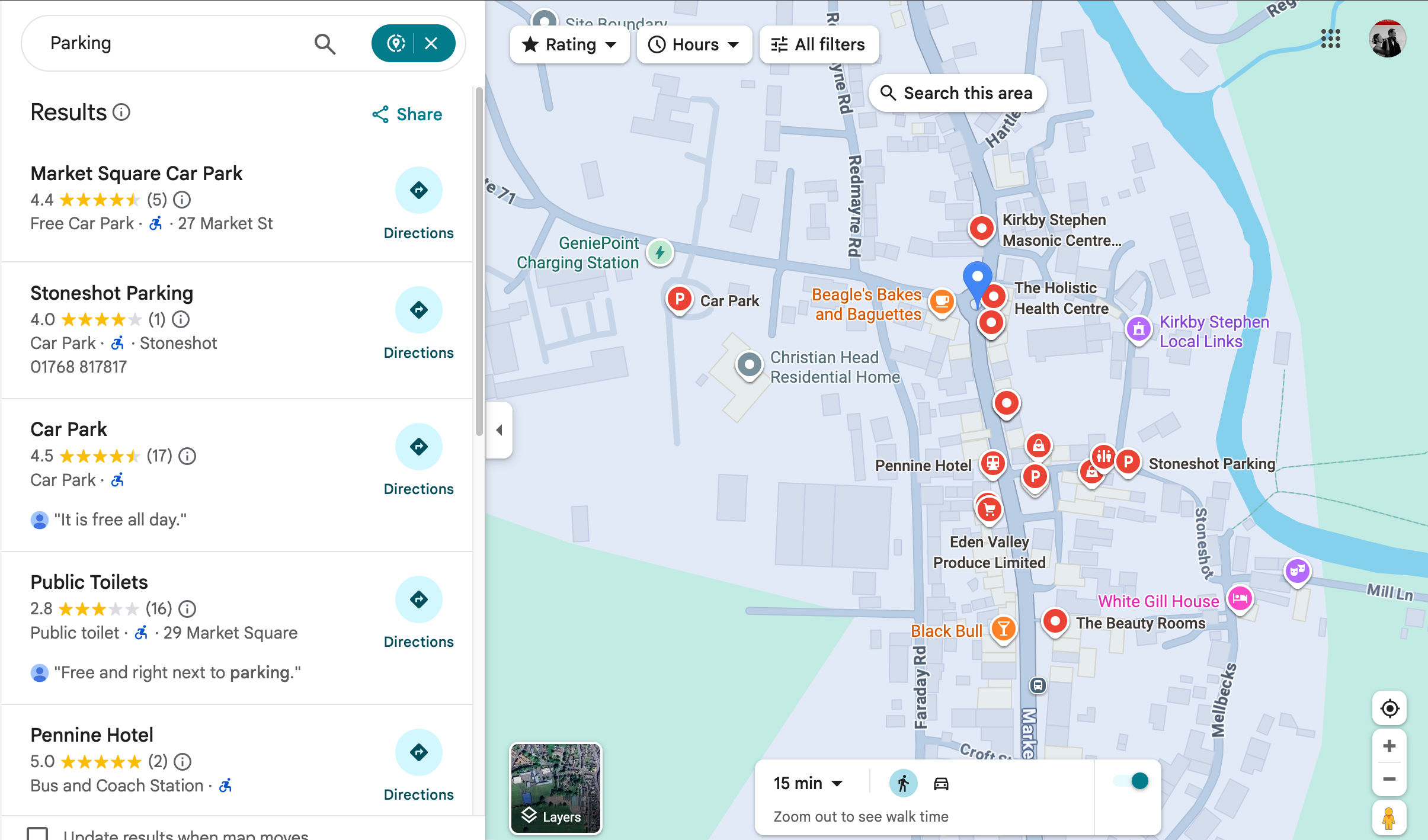
Kirkby Stephen has ample parking options all round town. All parking is FREE albeit some are time limited.
Muddy Boots – Scarpa has one dedicated parking space. There is a second spot, if unused may also be used if requested.
Muddy Boots – Arcade Royalee has no dedicated parking as the property is set back in a secluded shared courtyard. Nearest parking is on the main street - Market Street - free but time limited during set hour/days.
Market Street has FREE 2-Hour Time Limited parking Monday-to-Saturday 9am-to-5pm.
Free Unlimited Parking is available on streets away from Market Street, Market Square, Stoneshot Lane parking and Silver Street/Christian Head Free Car Park.
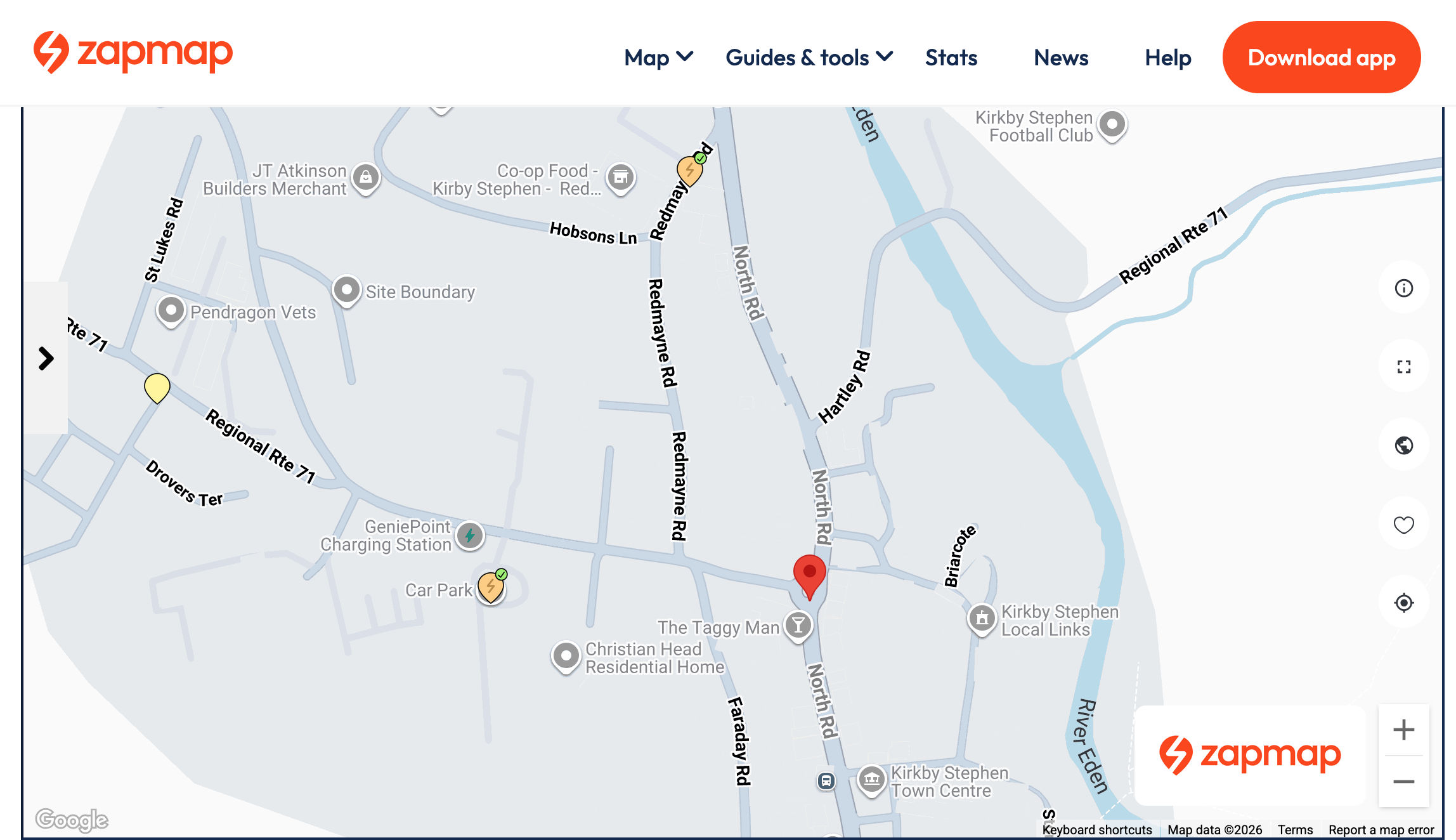
Muddy Boots Escapes properties currently do not have any onsite EV Chargers. However there are a couple of Public Chargers in Kirkby Stephen.
- Johnstones Garage
- Silver Street/Christian Head Free Car Park – Genie Charger
Look for Kirkby Stephen on Zap-MAP
Zap-MAP live charger info
Kirkby Stephen’s food shopping is dominated by independent producers and specialist shops:
- 🥬 Eden Valley Produce Limited – Fresh Produce & Wholefoods market (27 Market Square)
- 🥩 CI & C Steadman’s Butchers – Traditional butcher with Locally Sourced Produce (23 Market Street)
- 🐄 Owen’s Farm Shop & Café – Farm produce & meals (Sandwath Farm)
- 🍞 Brysons Bakery & Coffee Shop – Bakery & café (37 Market Street)
- 🛒 Co-op Food – Supermarket/convenience (Redmayne Rd)
- 🛍 SPAR Gregson Kirkby Stephen – Convenience store (35-41 High Street)
- 🛍 SPAR Kirkby Stephen (Edenside) – Convenience (North Rd)
- 🛒 ONE STOP – Village Stores Kirkby Stephen Ltd – Grocery store (Market St)
📌 Summary
Kirkby Stephen’s food shopping is dominated by independent producers and specialist shops with everyday necessities from convenience stores like Co-op and SPAR. There’s a strong local food culture with produce shops, butchers, farm shops and bakeries reflecting the town’s market heritage. Visit Upper Eden-FOOD SHOPS
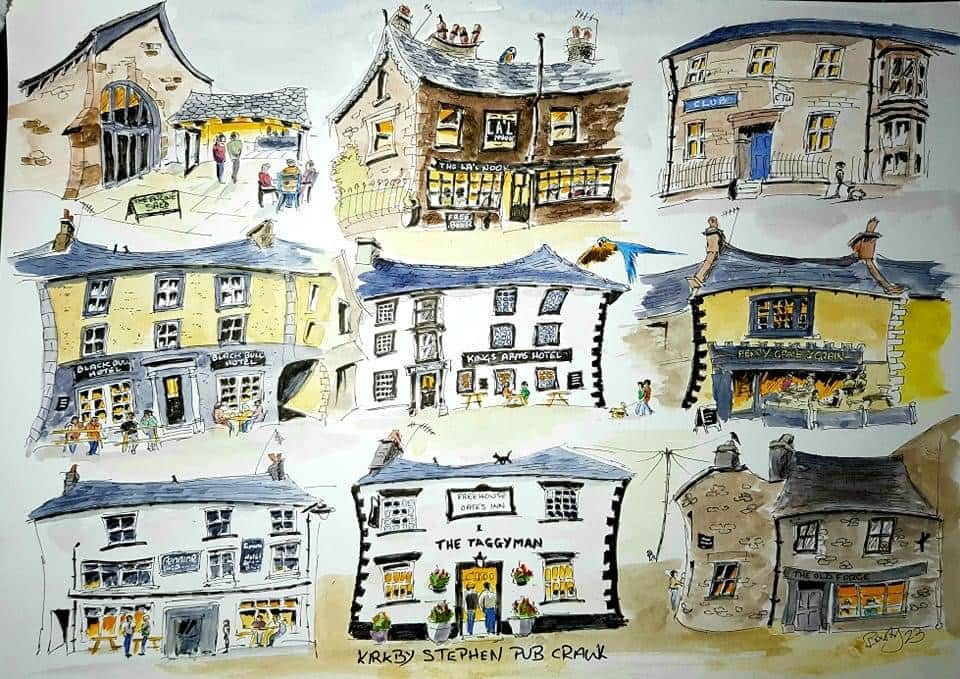
There are quite a few pubs throughout the local district but specifically here in Kirkby Stephen there are nine for you to visit - listed from South to North.
- The Engine Shed
- La’l Nook
- The Club
- Black Bull Kirkby Stephen
- Kings Arms (Currently Closed)
- Berry Grape & Grain
- Pennine Inn
- Taggy Man
- The Olde Forge
All serve popular beers, spirits and wines. Several have speciality Beers & Ales with some supplying local and regional Boutique Breweries.
- Walking sections of Wainwright’s Coast to Coast path
- Exploring the Nine Standards Rigg
- Visiting Smardale Gill Nature Reserve
- Cycling and scenic drives through Eden Valley
- Day trips to Lake District, Yorkshire Dales, North York Moors
- A base for stays to attend destination weddings at Eden Barn the Boutique Wedding Venue
- The monthly Kirkby Stephen Craft & Food Producers Market
Popular activities near Kirkby Stephen include:
The town itself offers independent shops, cafés, pubs, restaurants and a weekly & monthly market.
Kirkby Stephen and surrounding district have a great selection of dining and takeaway options, many within walking distance.
- Traditional Cumbrian pubs serving a variety of fare for clientele
- Independent cafés and tearooms
- Restaurants and takeaways
Most amenities are within easy walking distance, making it convenient for guests who prefer not to drive every day. For dining in options it’s recommended to call and book.Some Recommendations depending on your gastronomic desires-
TAKEAWAYS
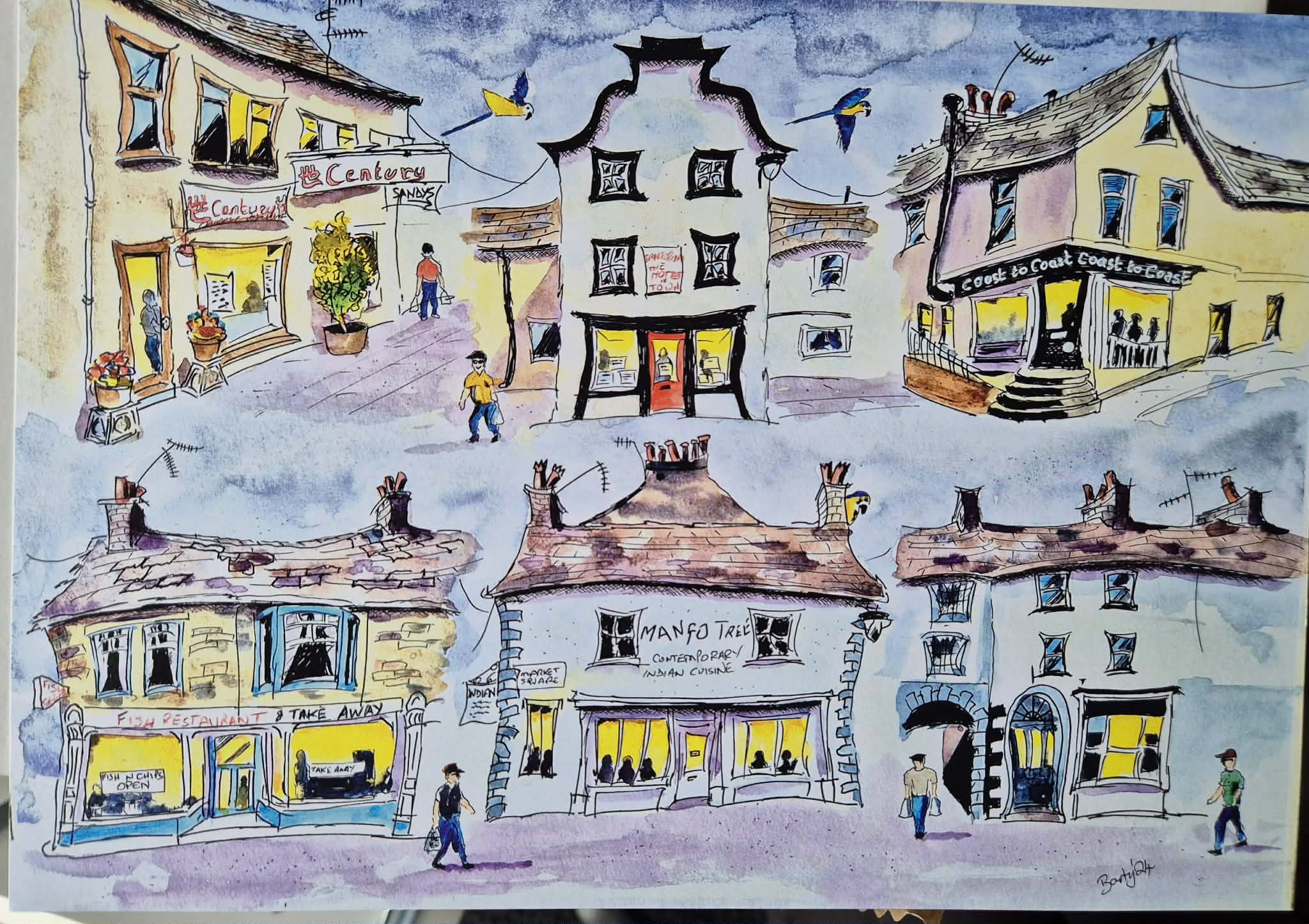
- Century Chinese Takeaway & Dine-In. Century Chinese
- Mango Tree - Indian Takeaway & Dine-In. Mango Tree
- Santorino's - Pizza | Kebabs Etc Santorino’s
Fish'n'Chips
- Coast-to-Coast Chippy
- Archway Chippy & Pizza
- Horseshoe Chippy
PUB FOOD & FINE DINING
- Black Bull @ Nateby - Great Country Fare Pub Food cooked fresh. Black Bull@Nateby
- Black Swan `Hotel @ Ravenstonedale - Fine Dining AA Rated and Pub Food Black Swan
- Berry Grape & Grain - Casual Dining with Tapas, Antipasto Grazing Plates Wine & Spirits. Berry Grape & Grain
Cafes & Casual Dining
Yes. Kirkby Stephen appeals to:
- Couples seeking a peaceful countryside break
- Families who enjoy outdoor activities
- Guests who prefer market towns over busy resorts
The area offers safe walks, wildlife spotting, and attractions suitable for all ages.
A car is helpful but not essential.
- Kirkby Stephen has a railway station on the Settle–Carlisle line
- Many local walks and pubs are walkable
- A car helps explore remote spots
Guests without a car still find plenty to do locally.
- Karim Taxi – 📞 +44 7706 437560 -Reliable local taxi service serving Kirkby Stephen and nearby villages with 24/7 availability.
- RKS Taxi – 📞 +44 7879 090590 Affordable, includes airport transfers
- Am Taxi 📞 Phone: 07930 856778
- Prima Taxi's 📞 Phone: 01768 372557 -taxi and minibus hire offering local journeys, Coast to Coast support and airport transfers.
- Japan On Wheels 📞 Phone: +44 7425 835299 -Private hire, taxi, chauffeur and transport service . Offers airport transfers, local journeys, and personalised travel options with free Wi-Fi and executive vehicles.
📌 Tips for Guests
Kirkby Stephen is a year-round destination
- Spring & summer – ideal for walking, cycling & scenery
- Autumn – quieter with beautiful colours
- Winter – cosy breaks & festive village charm
Each season offers a different experience of Cumbria’s countryside.
YES our holiday lets accept dogs with the exception of Muddy Boots – La Petite Mews which is strictly Pet Free, it’s an excellent base for exploring Cumbria with your four-legged companion.
Many guests choose Kirkby Stephen because it’s very dog-friendly, with miles of open countryside, walking routes, and welcoming pubs nearby.
We welcome responsible dogs always however you must make yourself familiar with both our House Rules plus local district regulations.
- Maximum 2 Well Behaved Dogs
- Must not be left unattended unless caged
- No puppies
- Ensure they are well pottied in areas that are noted in guest guidelines/book
- We reserve the right to charge a £50 EXTRA Cleaning Fee in the event of Dog Urine inside the property due to the extensive special treatment cleaning required to eliminate the urine traces and odour
HOUSE RULES
- Public Spaces Protection Orders (PSPOs) apply locally
- “Under Control” is a key legal standard
- Specific Zones May Be No-Dog or Dogs-On-Lead
- Check local signage: if a sign says “Dogs on Lead” — you must keep your dog leashed.
- Even where no sign is present: your dog must be under effective control.
- Be prepared to leash your dog at the direction of an officer or where the PSPO boundary applies.
- Always pick up dog waste and carry bags.
- Maintain ID on your dog’s collar at all times.
🐕 Dog Control Regulations in Kirkby Stephen & Cumbria
Where to find precise local rules
For detailed maps and schedules of dog leash/exclusion zones in Kirkby Stephen specifically:
📧 Email: [email protected]
📍 Westmorland & Furness Council PSPO page with maps and documents. Westmorland & Furness Council
Kirkby Stephen offers :-
- Fewer crowds than Lake District hotspots
- Better value accommodation
- Easy access to national parks
It’s ideal for guests who want space, scenery, and slower-paced holidays without sacrificing access to major attractions.
Here’s a verified list of all the castles and historic castle sites located within postcode district CA17 & within ~25 miles (Kirkby Stephen & surrounding area, Cumbria) — with direct links you can use on your website or travel pages:
🏰 Castles in CA17
- Brough Castle— Historic medieval castle ruins located in Church Brough, CA17 4EJ. Built around 1100 and once a key fortress overlooking the Stainmore Pass. English Heritage
- Pendragon Castle—Legendary castle ruin in Mallerstang, postcode CA17 4JT. A remote site tied to the myth of Uther Pendragon and offering atmospheric views of the valley. Wikipedia
- Lammerside Castle—Ruined medieval tower-house (pele tower) near Kirkby Stephen, postcode CA17 4LQ. Once part of a fortified complex; today remains are visible along local walking routes.Visit Cumbria
🏰 Castles Within ~25 Miles of Kirkby Stephen
- Appleby Castle—A medieval castle in Appleby-in-Westmorland with substantial surviving structures and gardens; dates from the 12th century and often open for visits and events. (Historic castle with strong Norman origins). Visit Cumbria
- Brougham Castle—Impressive medieval castle ruins near Penrith, originally Norman, later extended. One of Cumbria’s better preserved sites with public access and scenic views overlooking the River Eamont.Lake District Guide
- Lowther Castle & Gardens—Large ruined castle estate near Penrith, set in restored historic gardens. Although the castle building isn’t fully intact, the site is highly popular as an attraction with gardens, parkland, café and events. (About ~20-25 miles from Kirkby Stephen)Lowther Castle & Gardens
- Greystoke Castle—A historic castle in Greystoke, near Penrith. Still privately owned but hosts garden visits, occasional events and tours. Beautiful setting with formal grounds. Visit Cumbria
- Carlisle Castle—Major medieval fortress in Carlisle with a long history from Norman times to modern use. Well worth a day trip; substantial remains with exhibitions and public access. (Borderline ~25 miles from Kirkby Stephen but often included in castle itineraries in the region) . Visit Cumbria
- Kendal Castle—Historic castle overlooking Kendal in south Cumbria. Ruins of a 12th-century castle with great panoramic views and accessible walks. Probably near the 25 mile limit, but reachable from Kirkby Stephen for a day trip. Visit Cumbria
- Dalton Castle—A 14th-century fortified tower in Dalton-in-Furness. Smaller than a full castle keep but historically significant and preserved; a good example of a medieval defensive structure. (Check distance — this may be borderline but often included in regional lists) Visit Cumbria
- Scaleby Castle—A restored historic castle near Scaleby, with origins in the 14th century. Features a moat and gardens; occasional open days and events. (Worth checking opening details before planning a visit) Visit Cumbria
- Muncaster Castle (longer day trip)—Historic Cumbrian castle near Ravenglass with gardens and family attractions. This is a bit further out but still within comfortable driving range for a castle-focused day trip from Kirkby Stephen. Wikipedia
This is by no means a definitive list and you can definitely discover more Castle. But this list should give you an ample array of sites to visit with storied histories.
The name Kirkby Stephen tells you a lot about the town’s early history and who settled here.
“Kirkby” The first part, Kirkby, comes from Old Norse: “kirkja” = church “by” = village or settlement So Kirkby literally means “the village with a church.”
This reflects Viking (Norse) settlement in the Eden Valley during the 9th–10th centuries, when Scandinavian settlers mixed with the existing Anglo-Saxon population.
There are several “Kirkby” place names across northern England for this reason. “Stephen” The Stephen part refers to St Stephen, the Christian martyr to whom the parish church is dedicated.
The parish church of St Stephen is one of the most important historical features of the town and dates back to at least the Anglo-Saxon period, with later Norman rebuilding. The dedication became a way to distinguish this Kirkby from others in the region.
🕍 Churches in Kirkby Stephen (CA17)
- Kirkby Stephen Parish Church. This ancient parish church—known locally as St Stephen’s—has origins back to Saxon and Norman periods and houses historic artefacts like the Loki stone and medieval relics. Denomination: Church of England (historic parish church) 📍 Market Place, Kirkby Stephen, CA17 4QX National Churches Trust
- Kirkby Stephen Evangelical Church. A local evangelical congregation serving Kirkby Stephen and surrounding areas. Denomination: Evangelical/Non-denominational Kirkby Stephen Evangelical
- Kirkby Stephen Methodist Church. Traditional Methodist church part of the Kirkby Stephen & Westmorland Dales Circuit. Denomination: Methodist Kirkby Stephen Methodist
- Upper Eden Baptist Church. Friendly community church with weekly services and mid-week meetings. Denomination: Baptist Upper Eden Baptist
- Kirkby Stephen Gospel Hall. Independent Gospel Hall offering worship services and prayer meetings. Denomination: Gospel Hall (Independent Christian) Share My Bible
- Kirkby Stephen Quaker Meeting. Weekly Quaker worship and Quaker meetings. Denomination: Quaker (Religious Society of Friends). Kirkby Stephen Places of Worship
🏡 Churches in CA17 Villages & Surrounding Area
- St Andrew’s Church, Crosby Garrett. Historic Grade I listed parish church serving the Crosby Garrett community. Denomination: Anglican (Church of England) Wikipedia
- St Theobald’s Church, Great Musgrave (Active parish church). Local parish church serving a small rural community. Denomination: Anglican (Church of England). MapQuest
- St Oswald’s Church, Ravenstonedale. Active parish church with historic 18th-century origins and notable interior features. Denomination: Anglican (Church of England). Wikipedia
📌 Notes & Tips
- ✅ Most active churches list service times and events on their individual websites (links given above).
- ✅ Some non-conformist chapels and meeting houses in Kirkby Stephen have historic roots and community use beyond Sunday services. Visit Upper Eden
- ✅ For seasonal closures or special events, check individual church websites or contact local parish offices.
📜 The Story of the Loki Stone — Kirkby Stephen
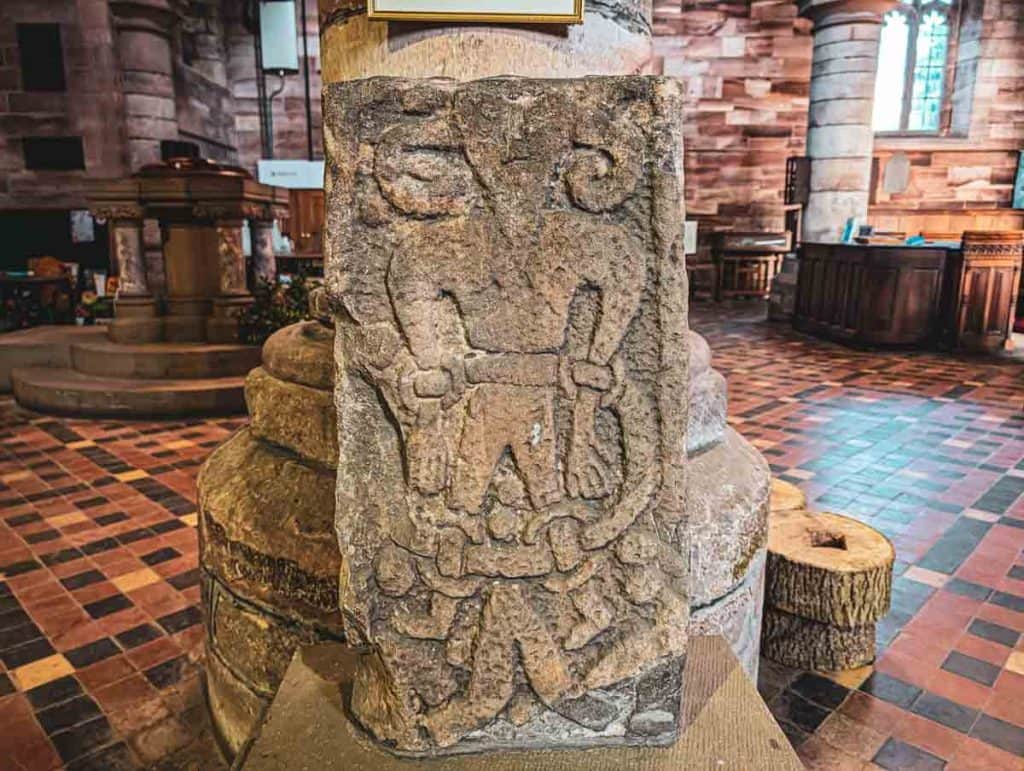
One of Kirkby Stephen’s most remarkable historic treasures is the Loki Stone, a carved sandstone block housed inside Kirkby Stephen Parish Church (often called the Cathedral of the Dales). It dates from around the 10th century AD, a time when Viking settlers lived in what is now Cumbria.
The stone is believed to have been part of an Anglo-Danish cross shaft, and its carving shows a horned, bearded figure bound in chains. Historians often interpret this as a depiction of Loki, the trickster god from Norse mythology, made into a symbol of the vanquished devil by early Christian carvers. Cumbria County History Trust
In Norse stories, Loki is responsible for the death of the god Baldr and is punished by the other gods — bound with serpent venom dripping on him until the apocalyptic events of Ragnarök. Early Christian sculptors may have chosen Loki’s image because it resonated with the idea of evil and punishment, helping to bridge pagan beliefs and Christian teachings in a time of religious transition. AW-History
The Loki Stone is exceptionally rare — one of only a handful of such carvings in Europe, and the only one known in Britain. Today it is displayed inside the church opposite the south entrance, where visitors can see this striking blend of Norse myth and early medieval Christian art.
📍 Learn more:
- Kirkby Stephen Parish Church & Loki Stone — National Churches Trust. National Churches Trust
- Kirkby Stephen Heritage Trail
- Cumbria County History Trust — The Bound Devil
Yes – Kirkby Stephen is an excellent base for attending weddings across the Eden Valley, Cumbria, the Yorkshire Dales and surrounding countryside. The town is ideally located close to many of the area’s most sought-after wedding venues, with local shops, pubs, restaurants and useful transport links for guests.
Muddy Boots Escapes highly rated 5-Star properties are a superb choice for wedding guests, families and bridal party members wanting stylish, comfortable accommodation nearby.
Muddy Boots – La Petite Mews is especially well suited for wedding party preparations, featuring its unique Powder Room – perfect for hair, make-up and getting ready before the big day.
For transport, local taxi services are available in Kirkby Stephen, making travel to and from venues simple and convenient. Please see our separate transport FAQ for taxi details.
Muddy Boots Escapes - View All Properties
Popular nearby wedding venues include:
- Eden Barn
- Long Acre Barn
- Ghyll Barn
- Holesfoot
- Blackton Grange Estate
- Fairbank Wedding Barn
Kirkby Stephen is perfectly placed for exploring some of the finest farm shops in Cumbria and the Eden Valley. Guests can enjoy a wonderful and diverse selection of local meats, artisan cheeses, fresh baking, seasonal vegetables, preserves, cakes and speciality foods representing the very best of Cumbrian agriculture and food production.
Many local shops stock well known regional favourites such as Cumberland Sausage, Cartmel Sticky Toffee products, Hawkshead Relish, Cranstons goods, Cumbrian chutneys, farmhouse cheeses and locally reared lamb and beef.
Owens Farm Shop in Kirkby Stephen deserves special mention as our own town’s proud representative in the farm shop sector, offering quality produce and a true local shopping experience.
Eden Valley Produce Ltd in Kirkby Stephen is also well worth a visit. Whilst not technically a farm shop, it carries a good range of local district produce and speciality foods.
Popular farm shop destinations within easy reach include:
- Owens Farm Shop
- Tebay Services Farm Shop
- Cross Lanes Organic Farm
- Mainsgill Farm Shop
Muddy Boots Escapes highly rated 5-Star properties make the perfect base for enjoying the superb food and farm shop experiences of the district.
Muddy Boots Escapes - View All Properties
Kirkby Stephen is a popular overnight stop for walkers and cyclists following several long-distance routes. Guests staying at Muddy Boots – Scarpa, Muddy Boots – Arcade Royale and Muddy Boots – La Petite Mews regularly use independent baggage transfer companies when walking or cycling through Cumbria, the Eden Valley and the Yorkshire Dales.
Routes passing through or close to Kirkby Stephen include:
- 🥾 Coast to Coast Walk
- 🥾 Lady Anne's Way
- 🥾 The Pennine Journey
- 🥾 Pennine Way
- 🥾 Eden Way
- 🥾 Dales High Way
- 🥾 Self-guided walking and cycling holidays across Cumbria, the Eden Valley and the Yorkshire Dales
Muddy Boots Escapes does not operate baggage transfer services directly, but the following independent companies may be useful for guests arranging luggage movement between accommodation stops.

Coast to Coast Packhorse
Baggage transfer and walker support along the Coast to Coast Walk and related long-distance routes.

Sherpa Van
Established baggage transfer provider serving walkers and cyclists across many UK long-distance trails.

Lake District Baggage Transfer
Local baggage transfer support for walkers exploring the Lake District, Cumbria and surrounding routes.

Please note: These are independent providers and are listed for guest convenience only. Please contact each company directly to confirm route coverage, luggage collection times, delivery arrangements, pricing and availability before your stay.
Yes – All Muddy Boots Escapes properties include Breakfast, free inclusive in the reservation. A light breakfast that would be best described as a Continental Breakfast. Produce supplied by our sister business “Eden Valley Produce” on the Market Square
We include:-
- Loaf of Bread for toast or sandwiches (Fresh Home Baked | Gluten Free Upon Request)
- Cereal (Gluten Free Option Available)
- Yogurt (Longley Farm)
- Milk & Juice (Vegan Milk Alternative Upon Request)
- Butter | Jams | Marmalade
- Various Tea & Coffee choices including Decaf Options
- Fresh Fruit
- Free Range Eggs
All Muddy Boots Escapes properties have fully equipped kitchens so that if guests choose to purchase locally or bring additional food stuffs, they can prepare and cook them also as an option.
Absolutely! Kirkby Stephen is one of England's recognised Walkers are Welcome towns and has a thriving walking community. Whether you're looking for a gentle guided stroll, a challenging fell walk, wildlife walk or simply want to meet like-minded people, there are several excellent organised walking groups operating in and around the Upper Eden Valley.
1. Kirkby Stephen & District Walkers are Welcome (Walk Eden) ⭐ Our Recommendation
This is the area's principal walking organisation and one we highly recommend to guests staying at Muddy Boots Escapes.
- Dawdles – Every Thursday morning
- Gentle guided walks of approximately 2–5 miles
- Ideal for visitors, beginners and anyone wanting a relaxed social walk
- Usually meet in Market Square, Kirkby Stephen
- Legstretchers – Generally held once each month
- Longer guided walks across the Upper Eden Valley, Howgills, Westmorland Dales and North Pennines
- Suitable for walkers looking for a more adventurous day out
- Walking festivals, heritage walks, seasonal walks, conservation work parties, Rights of Way volunteering and community talks
Website:
walkeden.org
Facebook:
Walk Eden
2. The Ramblers
Although Kirkby Stephen doesn't have its own Ramblers branch, nearby groups regularly organise walks starting in and around the town.
- Nine Standards Rigg
- Mallerstang
- Hartley
- Wild Boar Fell
- Upper Eden Valley
- Howgill Fells
- Most walks are open to non-members wishing to try before joining.
Website:
The Ramblers
Local Walks:
Find Local Walks
3. Ramblers Wellbeing Walks
- Free to attend
- No membership required
- Friendly and sociable
- Suitable for beginners
- Designed to improve health and wellbeing
Website: Ramblers Wellbeing Walks
4. Cumbria Wildlife Trust – Upper Eden Support Group
Ideal for guests who enjoy combining walking with wildlife and nature.
- Guided wildlife walks
- Botanical walks
- Nature excursions
- Birdwatching
- Walks around Smardale Gill and the Upper Eden Valley
Website:
Cumbria Wildlife Trust
Facebook:
Cumbria Wildlife Trust
5. Upper Eden U3A (University of the Third Age)
Perfect for retired and semi-retired visitors looking to combine walking with a friendly social programme.
- Walking groups
- Local history
- Gardening
- Photography
- Art
- Languages
- Book clubs
- Theatre trips
- Lunches and coffee mornings
- Crafts and discussion groups
Meetings are usually held at 10:00am on the second Tuesday of each month at the Masonic Hall, Kirkby Stephen.
Website:
Upper Eden U3A
Facebook Group:
Upper Eden U3A Facebook Group
Walking Festivals
- Walkers are Welcome Festivals
- Heritage walks
- Guided history walks
- Westmorland Dales Festival walking events
- Seasonal community walks
Our Recommendation
If you're staying with Muddy Boots Escapes and would like to meet fellow walkers, we'd recommend:
- Walk Eden / Walkers are Welcome – Our top recommendation for most visitors.
- The Ramblers – Excellent for experienced hill walkers.
- Cumbria Wildlife Trust – Ideal for nature lovers.
- Upper Eden U3A – A great social option for retired and semi-retired walkers.
Many of these organisations warmly welcome visitors. We recommend checking their website or Facebook page before travelling, as meeting locations and walk schedules may occasionally change.
More Muddy Boots Escapes Information
Use these pages to explore accommodation, guest reviews and things to do around Kirkby Stephen.